
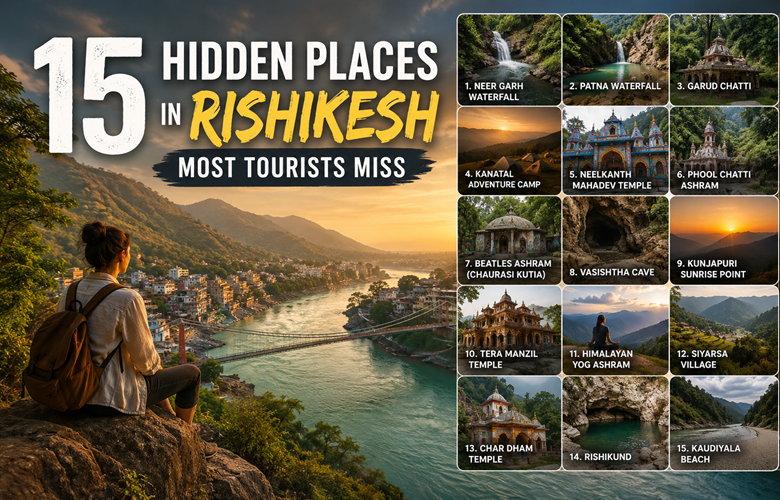
15 Hidden Places in Rishikesh Most Tourists Miss
15 Hidden Places in Rishikesh: Secret Spots Away from the Tourist Crowds
The standard tourist itinerary for Rishikesh is highly predictable. Most visitors cross Ram Jhula, watch the evening Ganga Aarti at Triveni Ghat, brave the white-water rapids of Shivpuri, and grab a wood-fired pizza at a crowded café. While those experiences are iconic, they only scratch the surface of what this ancient region offers.
When the town becomes overcrowded with weekend traffic, the true essence of the Himalayas reveals itself in the quiet corners that maps rarely highlight. Beyond the commercial hum lies an alternative map of deep meditation caves, multi-tiered forest waterfalls, and isolated river beaches where time slows down.
Exploring these lesser-known landscapes requires a comfortable base camp that balances isolation with accessibility. Premium accommodations like Aloha Rishikesh serve as an ideal launchpad. Choosing a serene sanctuary like the Aloha Resort Rishikesh allows you to spend your days navigating rugged jungle trails and return to high-end comfort by the riverside. Whether you choose the independent luxury of Aloha Apartments Rishikesh or the full hospitality suite at Aloha Hotel Rishikesh, staying along the pristine stretch managed by Aloha by Blissful Ganges keeps you connected to the authentic, quiet spirit of the river.
If you want to experience the spiritual capital without the tourist crowds, add these 15 Hidden Places in Rishikesh Most Tourists Miss. gems to your journey.
1. Vashishta Gufa (The Cave of Sage Vashishta)
Located roughly 25 kilometers upstream from the main town along the Badrinath Highway, Vashishta Gufa is arguably the most spiritually potent site in the region. According to ancient texts, the great Sage Vashishta, one of the Saptarishis (Seven Sages), came here to meditate after the tragic loss of his children.
Unlike the highly commercialized ashrams in town, this natural limestone cave maintains absolute silence. The interior is pitch black, cooled naturally by the rock formations, and illuminated only by a single oil lamp over a small Shiva Lingam. A 200-step descent through an ashram leads to the cave mouth, which opens up directly onto a completely private, white-sand beach where the Ganges flows with remarkable clarity.
2. Jhilmil Gufa
Tucked deep inside the Manikoot Parvat, past the famous Neelkanth Mahadev Temple, Jhilmil Gufa is a cluster of three small, sacred caves. This site is located within the buffer zone of the Rajaji National Park (Manikut Kajri Van), an active wildlife corridor frequently traversed by wild Asian elephants.
Reaching the caves requires a moderate 45-minute trek through thick sal and oak forests. The three distinct caves are historically tied to ancient mystics: one is dedicated to Guru Gorakshanath, the second to King Alha Udal, and the third to Guru Jhilmil. It remains an active residency for a handful of wandering sadhus who practice intense austerity far away from the modern world.
3. Patna Waterfall (The Limestone Cave Cascade)
While Neer Garh Waterfall draws massive crowds, Patna Waterfall remains blissfully isolated. Named after the small, traditional Garhwali hamlet of Patna Village nearby, this cascade is 15 Hidden Places in Rishikesh Most Tourists Miss, deep within a dense forest ecosystem.
The journey to the falls requires a steep, 1.5-kilometer uphill hike on an unpaved forest trail. The unique feature of Patna Waterfall is its limestone formations. Over thousands of years, the mineral-rich water has carved out shallow caves behind the main drop. The air here smells of wild moss and damp earth, and because there are no commercial stalls on the trail, you will likely have the natural rock pools entirely to yourself.
4. Phool Chatti Waterfall
Just a short drive beyond the Lakshman Jhula area on the Neelkanth Temple Road lies the Phool Chatti trail. While the Phool Chatti Ashram is well-regarded by serious yoga practitioners, the nearby waterfall is routinely bypassed by tourists rushing toward bigger attractions.
A short but challenging hike over damp, slippery rocks leads to a multi-tiered stream that tumbles into a clean, shallow basin. The canopy overhead is so dense that it blocks out direct sunlight, keeping the microclimate remarkably cool even during peak summer afternoon hours. It is an exceptional spot for early-morning meditation or quiet birdwatching.
5. Neer Garh Waterfall: The Elusive Second Level
Nearly every traveler to Rishikesh visits Neer Garh, pays the nominal entry fee, and stops at the primary pool where small vendors sell instant noodles and tea. However, data from local forest guides indicates that less than 15% of visitors venture beyond this point.
If you continue climbing the rugged, narrow mountain track for another 20 to 25 minutes, the path opens up to the second, much larger level of the waterfall. Here, the water drops from a height of over 30 feet into a deep, emerald-green natural pool. Surrounded by sheer rock faces and untouched mountain flora, this upper shelf feels like an entirely different world compared to the crowded base below.
6. Rishikund Hot Springs
Positioned right next to the historic Raghunath Temple near Triveni Ghat, Rishikund is an ancient water tank steeped in local folklore. Legend dictates that the pond was filled by the Goddess Yamuna herself, pleased by the intense penance of the sage Kubz.
While not a boiling sulfur spring like those found deeper in the high Himalayas, the waters of Rishikund remain noticeably warm throughout the winter months. On a clear morning, the reflection of the Raghunath Temple’s ornate architecture mirrors perfectly across the still surface of the pond. It is a quiet oasis of classical faith buried deep within the oldest residential quarters of the city.
7. The Silent Beaches of Shivpuri (Post-Dusk)
By day, Shivpuri is the chaotic epicenter of Indian river rafting, filled with life jackets, paddles, and shouting adventure groups. But by 4:30 PM, when the final commercial rafts are loaded onto trucks and the day-trippers return south, a profound transformation occurs.
The expansive white-sand banks of Shivpuri become completely deserted. The river here is wide, and the surrounding hills cast long evening shadows over the water. Walking along these beaches at dusk offers a stark, beautiful contrast to the daytime chaos—allowing you to sit by the water and listen to the raw, uninterrupted sound of the river rapids.
8. Garud Chatti Waterfall
Situated roughly 9 kilometers from the town center along the Badrinath Highway, Garud Chatti is a masterclass in camouflage. Thousands of cars pass the trailhead every single week on their way to major shrines, completely unaware of the geological marvel sitting just a few hundred meters off the asphalt.
A short trail through the trees brings you to a unique waterfall that cascades down seven distinct stone steps, especially during and immediately after the monsoon season. The step-like structure creates a series of small, individual wading pools. Visiting on a weekday morning ensures total solitude.
9. Malakhunti Village
For travelers looking to understand authentic Garhwali culture without the performative elements of commercial tourism, Malakhunti Village is a revelation. Located across the river on the quieter eastern banks, this tiny agrarian settlement features traditional stone houses, narrow walking paths, and neatly carved step farms.
Life here moves to the rhythm of the harvest and the changing seasons. Walking through the village offers a glimpse into a sustainable, mountain way of life that has resisted the rapid commercial development gripping downtown Rishikesh.
10. Astha Path (The Marine Drive of Rishikesh)
Also known simply as the Marine Drive, Astha Path is a beautifully constructed, 24-kilometer-long pedestrian walkway that hugs the banks of the Ganges. It runs far away from the vehicular noise of the main highways.
While locals use it for early morning jogs and evening walks, tourists rarely explore its full length. The path is wide, paved with interlocking tiles, and lined with stone benches facing the river. It provides an unhurried, flat walking route to take in the changing colors of the river during sunrise without having to dodge scooters or street vendors.
11. Phool Chatti Forest Trail
This is an unmapped trekking route that weaves through the Rajaji National Park borderlands near the Phool Chatti region. It is a prime ecosystem for birdwatchers, home to over 300 species of migratory and resident birds, including the Great Hornbill, Himalayan Pied Kingfisher, and various rare raptors.
The trail features rolling elevation changes and unhindered views of the Shivalik mountain ranges. Because it is a designated forest trail, keeping to the visible paths is highly recommended to protect the delicate undergrowth and avoid disturbing local wildlife.
12. The Secret Shingle Beaches near Tapovan
Tapovan is known for its bustling hostel culture, organic cafés, and yoga schools. However, if you follow the steep, unmarked dirt paths that drop down toward the river behind the main commercial cliffs, you will discover small, isolated shingle beaches.
Covered in smooth, grey river stones instead of fine sand, these tiny coves are completely cut off from the street noise above by the natural topography of the gorge. It is the ultimate spot to sit with a book, practice personal yoga, or watch the swift undercurrents of the river in absolute peace.
13. Byasi (The Kayaking Outpost)
Located roughly 30 kilometers upstream from Rishikesh, Byasi is a small settlement that remains largely untouched by mass tourism. While Shivpuri handles the bulk of commercial rafting, Byasi serves as the training ground for serious whitewater kayakers and multi-day expeditionists.
The riverbank here features long stretches of pristine sand and deep, calm pools of water ideal for flat-water paddling practice. The lack of large hotels and commercial markets keeps the air exceptionally clean and the starlight remarkably bright during overnight camping trips.
14. Kodiyala (The Big Rapids Viewpoint)
For those who want to witness the raw power of the Ganges, Kodiyala is unmatched. Situated further up from Byasi, this area is home to “The Wall,” a notorious Grade IV+ rapid that challenges the most experienced river guides in the country.
Away from the launching points, the high cliffs of Kodiyala offer dramatic, sweeping vantage points looking down into the deep river canyons. The juxtaposition of the roaring, white-water rapids against the silent, towering mountain walls creates an unforgettable visual experience.
15. Jai Mata Tara Temple (The Hilltop Solitude)
Perched quietly on a ridge overlooking the valley, the Jai Mata Tara Temple sits in the shadow of the massive Neelkanth Mahadev complex. Because it requires an uphill climb up a flight of stark white steps, the casual crowds skipping past to the main temple entirely ignore it.
At the summit, the atmosphere is defined by absolute silence and a steady mountain breeze. The temple courtyard offers a 360-degree panoramic view of the forested hills and the distant river basin below. It stands as a monument to pure, uncommercialized devotion.
Cultivating the Perfect Offbeat Itinerary
Planning an exploration of these 15 Hidden Places in Rishikesh Most Tourists Miss. locations requires a balanced travel strategy. To make the most of your journey into the quieter side of the region, keep these practical elements in mind:
- Transportation Strategy: Hiring a local scooter or a dedicated private taxi for the day is the most efficient way to reach distant trailheads like Vashishta Gufa or Jhilmil Gufa, as public transport options to these remote locations are highly irregular.
- Packing Essentials: Many of these locations have zero commercial infrastructure. Always pack your own drinking water, light snacks, a basic first-aid kit, and high-traction footwear for slippery jungle trails.
- Leave No Trace: These eco-sensitive zones remain pristine because they receive low foot traffic. Pack a small trash bag in your daypack to carry all plastic waste back to the city for proper disposal.
After a long day spent navigating steep forest trails, dealing with mountain humidity, and wading through cold river pools, your choice of accommodation dictates the quality of your trip. Retreating to a peaceful, well-managed sanctuary makes a substantial difference. Properties like Aloha Rishikesh provide an ideal mix of premium amenities and natural scenery.
Unwinding by the infinity pool at Aloha Resort Rishikesh or enjoying the spacious privacy of Aloha Apartments Rishikesh allows you to recharge in an environment that honors the beauty of the landscape. Whether you are enjoying a meal looking out over the water at the Aloha Hotel Rishikesh or experiencing the tailored hospitality of Aloha by Blissful Ganges, having a quiet base camp ensures that your time in the yoga capital remains restorative, authentic, and profoundly peaceful.
Read more: https://blog.alohabyblissfulganges.com/best-time-to-visit-rishikesh-month-by-month-guide/
What are the best hidden, offbeat places to visit in Rishikesh for absolute peace and meditation?
For a distraction-free, deeply spiritual experience, Vashishta Gufa (Sage Vashishta’s Cave) and Jhilmil Gufa are unmatched. Located 25 kilometers upstream from the main town, Vashishta Gufa offers a naturally silent, cool limestone cave environment that opens directly onto a completely secluded white-sand beach. Jhilmil Gufa, tucked within the quiet Manikoot Parvat forest buffer zone, is equally isolated and remains an active home for practicing sadhus.
To explore these remote sites comfortably while enjoying a luxury retreat, staying at a premium riverside sanctuary like Aloha Rishikesh or booking the independent accommodations at Aloha Apartments Rishikesh gives you a peaceful launching pad away from the main tourist traffic.Are the hidden forest trails and remote waterfalls in Rishikesh safe for solo travelers?
Yes, the lesser-known paths-such as the trails to Patna Waterfall, Phool Chatti Waterfall, or the upper second level of Neer Garh-are safe during daylight hours. However, because these routes lack commercial stalls and see very low foot traffic, solo travelers should follow these basic safety guidelines:
Always complete your treks and head back before 4:00 PM to avoid fading mountain light.
Stick closely to the visible, marked trails; do not wander deep into unfamiliar forest areas bordering Rajaji National Park.
Inform your resort desk, such as the concierge team at Aloha Resort Rishikesh-about your planned itinerary before setting off into network-isolated zones.How do I reach remote locations like Vashishta Gufa or Patna Waterfall from Tapovan?
Because mass public transit does not run to these uncommercialized trailheads, the most flexible and efficient transport options are:
Two-Wheeler Rentals: Renting a local scooter or motorcycle is perfect for navigating the winding mountain roads up the Badrinath Highway.
Private Cabs: Arranging a dedicated private taxi for the day allows you to smoothly reach distant points like Byasi, Kodiyala, or Vashishta Gufa without waiting on irregular local transport.
Choosing a centrally located yet secluded base camp like Aloha Hotel Rishikesh in the Tapovan area ensures you can quickly connect to the main highway paths leading both upstream and downstream.Is there an entry fee to access these hidden gems?
Most of the natural and spiritual hidden places-including Vashishta Gufa, Garud Chatti Waterfall, Rishikund Hot Springs, and Astha Path-are completely free to access. A few locations require a nominal environment or entry fee collected by local forest departments:
Neer Garh Waterfall (Upper Trail): A small entry fee (~₹30 to ₹50) is charged at the primary forest checkpoint.
Beatles Ashram (Chaurasi Kutia): While widely known, this site sits within Rajaji National Park territory and charges a structured entry fee (~₹150 for Indians, ~₹600 for foreign nationals).What is the best season and time of day to explore Rishikesh’s offbeat spots?
The ideal season to explore these hidden gems runs from October to March, when the weather is crisp and perfectly suited for uphill hiking. If you are traveling during the warmer months (April to June), always aim for early morning departures (6:00 AM to 9:00 AM) to catch the morning mist and avoid the peak midday heat.
After a morning of rugged, off-road exploration, returning to a refreshing retreat handled by Aloha by Blissful Ganges allows you to unwind by the pool, utilize full spa amenities, and recharge comfortably for your next day’s journey.